
Sports Mats · 3 min read · September 22, 2026
What Actually Makes One Golf Putting Mat Better Than Another?
There's no one spec that makes a putting mat 'better.' Four things actually separate a good one from a bad one — and thickness alone isn't the deciding factor.
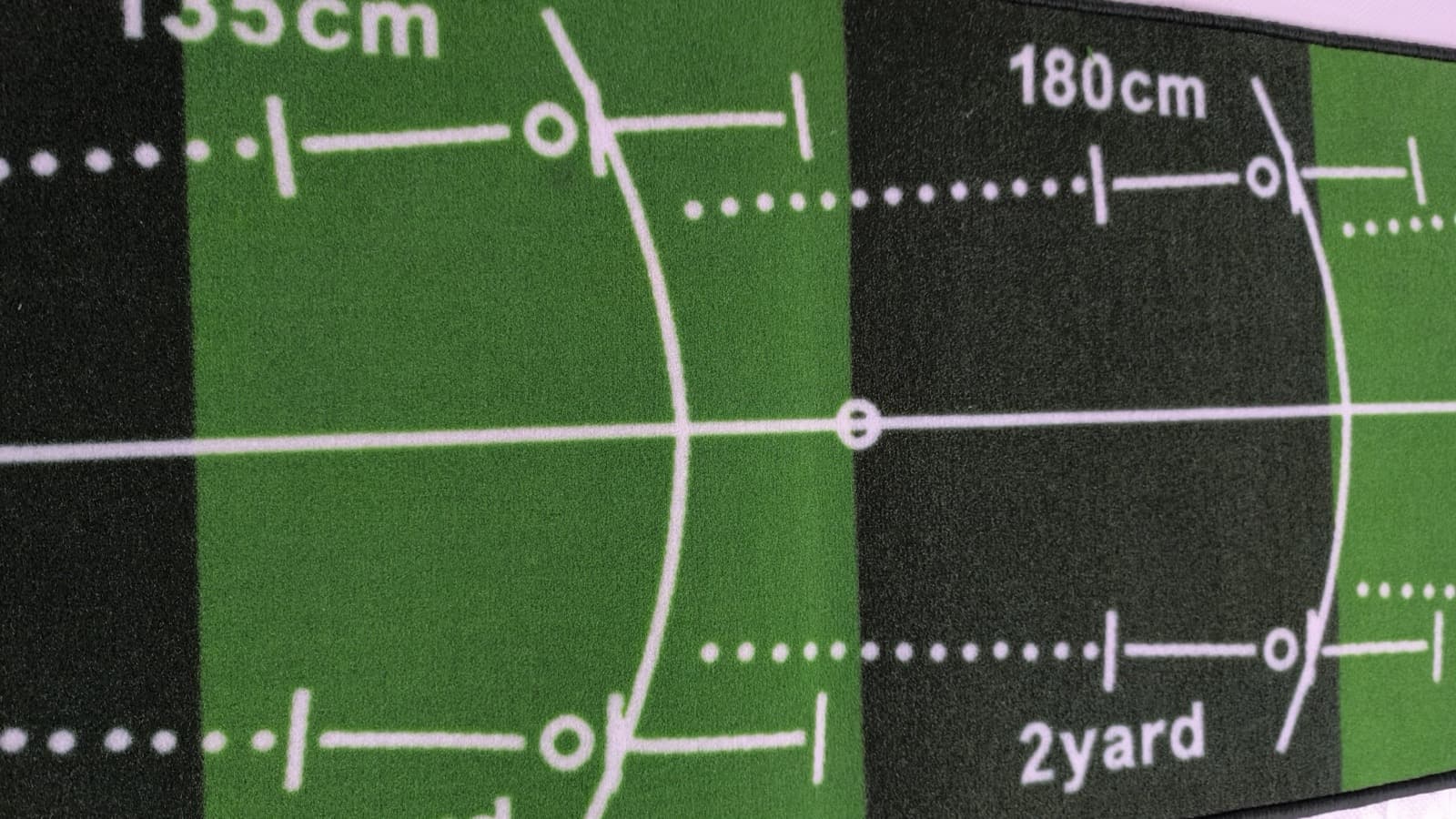
The mats that feel better are tuned to a stated purpose — retail display, home practice, a training facility — not chasing one universal "best" spec. Surface height, backing density, edge and seam finish, and how honest the listing is about what an indoor mat can't do: those four things actually separate a good one from a bad one.
Surface height and backing density set the pace
A thicker nap and denser backing slow the ball and can mask a slightly uneven sub-floor; a thinner, tighter construction rolls faster and shows every inconsistency underneath. Neither wins outright — it depends on whether the mat needs to play fast for serious practice or forgiving for a retail unit that gets rolled up daily.
Edge and seam finish
A mat that curls at the edges or has a visible, raised seam interrupts the roll right where you're trying to read the break. That's worth checking on any mat regardless of brand or price point — it's a manufacturing-quality issue, not a design choice.
Customization matters more for retail buyers
Custom size, layout and printed markings or branding change how the mat performs as a retail or promotional item, even if they don't change how it rolls. For a training facility, that's less relevant than the surface itself.
Be suspicious of any mat claiming to replicate a real green
No indoor putting mat rolls identically to an outdoor green — grain, moisture and grass height vary hole to hole in ways a manufactured surface can't fully copy. A mat that's upfront about being tuned for a specific use, rather than sold as a universal green replacement, is usually the more honestly made product.
This article is general industry guidance. For advice on a specific project, contact our team.
Related products