
Kitchen & Anti-Fatigue Mats · 6 min read · October 8, 2026
Why Thickness Matters When Choosing an Anti-Fatigue Kitchen Mat
Thicker feels softer in the shop. After a month at the sink, density and edges matter as much as inches. Here's how thickness really works on an anti-fatigue kitchen mat, and how to choose or stock the right one.
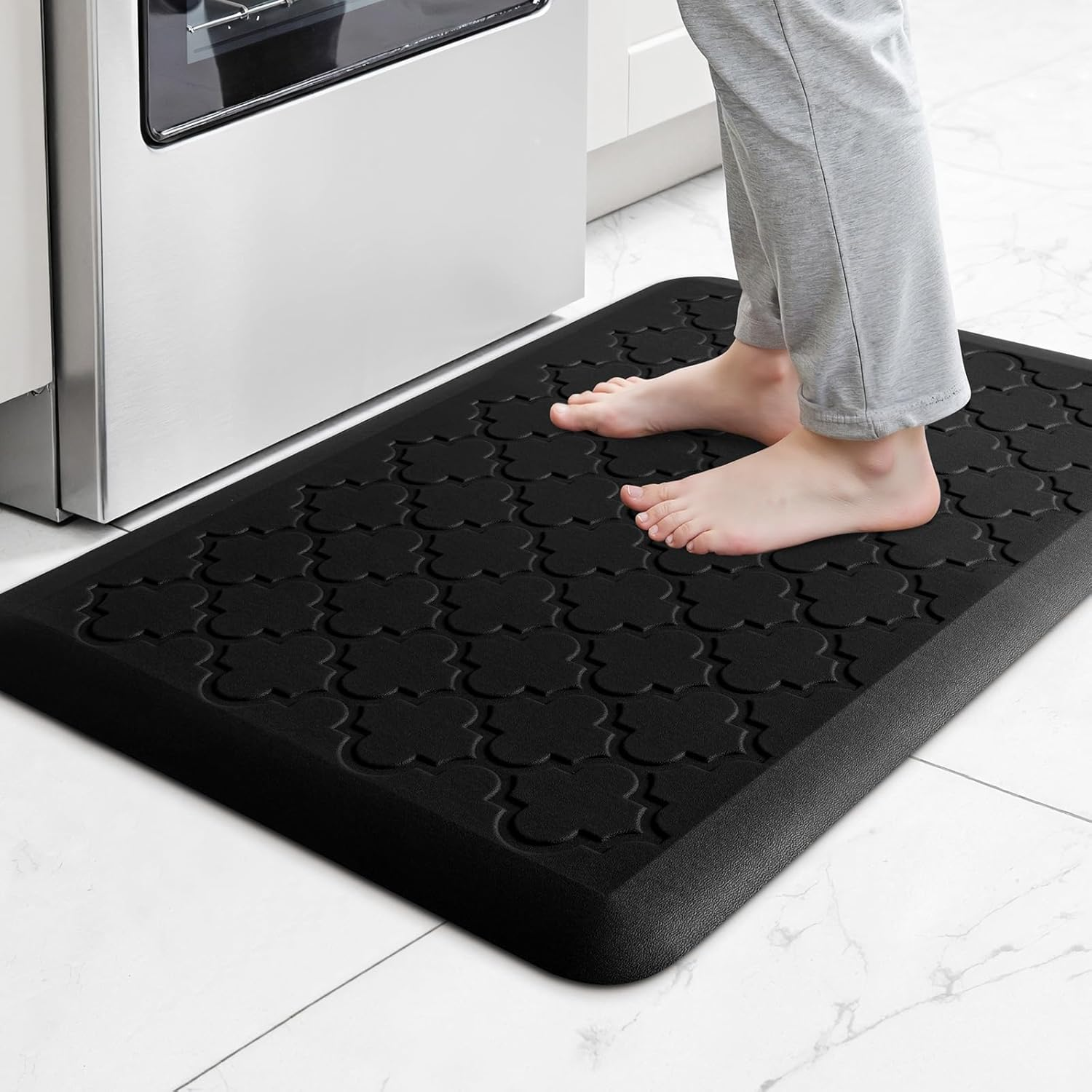
Stand on two anti-fatigue kitchen mats in a showroom and the thicker one wins every time. It feels softer, so it must be better. Then you stand on it for an hour at the sink, and the answer gets less obvious.
Thickness does matter. It's the space the foam has to compress before your heel meets the hard floor. But thickness on its own tells you less than most product listings suggest, and a mat that's too thick brings problems of its own.
The short answer
For most home kitchens, consumer guides land on roughly 1/2 to 3/4 inch (about 12–20mm) for an anti-fatigue kitchen mat. Go toward the thicker end for long stretches of standing, but only if the foam is dense enough not to bottom out, and the edges are bevelled. Mats approaching an inch or more are often too thick for a kitchen.
What thickness actually does
An anti-fatigue mat works by giving a little under your weight. The usual explanation is that your muscles make small, constant adjustments to keep balance on that slightly soft surface, which keeps blood moving and takes the edge off standing still on tile or concrete.
Thickness sets how much give is available. Too thin, and the foam is fully compressed the moment you step on it, so you're effectively standing on the floor with a rubber sheet over it. Thicker material gives the foam room to work. That's why thickness matters in the first place.
Why density matters just as much
Here's what the showroom test misses. Two mats of the same thickness can feel completely different after twenty minutes, because one is made of soft, low-density foam and the other of firmer, higher-density material.
Soft foam feels great for the first minute. Under a full day of standing, it compresses to almost nothing where your feet are, and you're back on the hard floor. A denser core gives less on the first step but keeps supporting you, and it recovers its shape when you step off. That recovery is what separates a mat that lasts from one that develops two permanent footprints in front of the sink.
So read thickness and density together. A medium-thick mat with a dense core will usually outperform a very thick, very soft one. Our cores are PU or PVC foam, and commercial constructions are built for 8-hour shifts; we'd always choose a firmer core at moderate thickness over a squashy thick one for that kind of use. The anti-fatigue mat comfort guide covers the other comfort factors.
When thicker becomes a problem
There's a ceiling, and in a kitchen you hit it sooner than you'd think.
- Trip risk. Every extra millimetre is a step up for a toe, a trolley wheel or a dog. On a thick mat, a bevelled edge that tapers down to the floor is not optional.
- Door and drawer clearance. Dishwasher doors, oven doors and low cabinet doors swing close to the floor. Measure the gap before you buy; a mat that catches a door every time it opens won't stay down for long.
- Stability. Very thick, soft mats can feel wobbly, especially when you're turning between the counter and the hob with a hot pan.
- Cleaning and handling. Thicker mats are heavier and bulkier to lift, shake out and clean under.
Choosing a thickness by use
Think about how long someone stands on the mat in one go, then work backward.
Short stints at the sink or counter in a home kitchen: the thinner end of the range is fine, and it's easier to live with around doors. Long cooking sessions, or a home cook with sore feet or knees: move toward the thicker end, with a dense core. Commercial kitchens, prep lines and full shifts: firmness and durability come first, because the mat has to keep its shape for eight hours a day, and the surface needs to be wipe-clean and resistant to mould and bacteria.
Don't forget the floor under it. A mat on concrete or stone has more work to do than one on a sprung wooden floor, and the difference you'll feel from extra thickness is bigger.
For retailers: build a thickness ladder
If you're stocking anti-fatigue kitchen mats rather than buying one, offer a clear step between options instead of five near-identical SKUs. Two or three thicknesses, each with a stated use ("everyday sink mat", "long-standing comfort"), help customers self-select and cut returns from people who bought too thin or too thick.
Put the honest information on the listing: the thickness, whether the edges are bevelled, and a line about checking door clearance. Customers who measure first don't send mats back. Thickness, size, edge bevel and surface (printed or textured) can all be specified on our solid-grip anti-fatigue kitchen mat, and the standing desk anti-fatigue mat is made in several densities for the same reason.
The other things that decide whether a mat works
Thickness and density get you most of the way. Two more details finish the job: a solid grip base so the mat doesn't creep as you shift your weight, and a non-slip backing on smooth kitchen floors, which matters most near a sink (here's why). Size matters too. A mat that covers the whole standing zone beats a thick one that covers half of it.
FAQ
How thick should an anti-fatigue kitchen mat be? For most home kitchens, roughly 1/2 to 3/4 inch (about 12–20mm). Choose the thicker end for long periods of standing, as long as the foam is dense and the edges are bevelled.
Is a thicker anti-fatigue mat always better? No. Beyond a point, extra thickness adds trip risk, can block dishwasher and cabinet doors, and may feel unstable. Density decides whether the thickness keeps supporting you.
Why does my anti-fatigue mat feel flat after a few weeks? The foam is probably too soft for the hours it's used. Low-density foam compresses permanently under daily standing; a denser core recovers its shape.
Can I order anti-fatigue kitchen mats in a custom thickness? Yes. Thickness, size, edge bevel and printed or textured surfaces can be specified. Tell us what your range needs and we'll suggest options.
This article is general industry guidance. For advice on a specific project, contact our team.
Related products