
Rug Pads · 6 min read · October 13, 2026
Felt-and-Rubber vs Thin Grip Rug Pads: Which Rug Pad for Hardwood Floors Should You Stock?
Customers ask for a rug pad for hardwood floors and expect one answer. There are two, and they solve different problems. Here's how felt-and-rubber cushion pads and thin double-sided grip pads compare, and how retailers can stock both without confusing buyers.
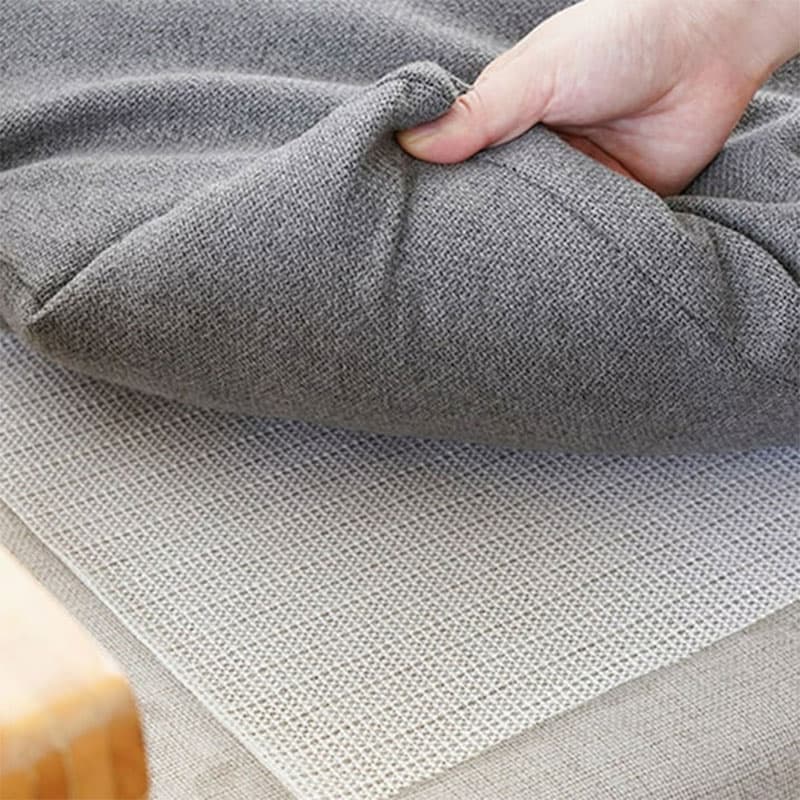
A customer lays a new rug on an oak floor. A week later the rug has crept a few centimetres toward the sofa, the corner has curled, and the door now catches it. They come back and ask for a rug pad for hardwood floors.
There are two good answers to that request, and they're different products. A thin double-sided grip pad stops the rug moving. A felt-and-rubber cushion pad stops it moving and adds noticeable softness underfoot. This guide explains which one fits which rug, and how retailers can stock both.
The short answer
Choose a felt-and-rubber rug pad for large area rugs in living rooms and bedrooms, where cushioning and comfort matter. Choose a thin double-sided grip rug pad for runners, smaller rugs and doorways, where the rug must stay flat and low. Both rug pads grip without adhesives and can be cut to size.
What a thin double-sided grip rug pad does
A thin double-sided grip rug pad holds the rug to the floor from both sides. The underside grips the hardwood, the top side grips the back of the rug, and the rug stops sliding and creeping.
The thin grip pad adds very little height. That matters in two places: under runners and small rugs, where a thick pad makes the rug feel spongy and the edges lift, and near doors, where extra height can stop a door swinging over the rug. Our double-sided grip rug pad is a PVC grip pad with recycled options, it can be trimmed to size, and it comes in off-white or grey.
What a felt-and-rubber rug pad does
A felt-and-rubber rug pad combines a felt layer for cushioning with a natural rubber layer for grip. The felt makes the rug feel thicker and softer underfoot; the natural rubber holds the pad in place on the floor without adhesives.
Felt-and-rubber rug pads suit large area rugs in living rooms and bedrooms, where people stand, sit and walk barefoot. The cushioning also reduces wear on the rug, because the rug pile isn't crushed directly against a hard floor. Our felt-and-rubber cushion rug pad uses recycled felt and natural rubber, and the felt density can be specified.
Felt-and-rubber vs thin grip at a glance
The differences a buyer notices are listed below.
- Main job: the thin grip rug pad stops the rug sliding; the felt-and-rubber rug pad stops sliding and adds cushioning.
- Height: the thin grip pad adds very little; the felt-and-rubber pad adds noticeable thickness.
- Best rugs: the thin grip pad suits runners, small rugs and rugs near doors; the felt-and-rubber pad suits large area rugs in living rooms and bedrooms.
- Customisation: both rug pads come in custom sizes; the grip pad offers thickness and density options, and the felt-and-rubber pad offers felt density options.
Protecting the hardwood finish
Hardwood owners worry about two things: residue and discolouration. Both of our rug pads grip by friction rather than adhesive, so there's no glue left on the floor when the rug is moved.
Floor finishes vary a lot, from oiled to lacquered to engineered surfaces. Advice about which pad materials suit which finish varies between sources, so the safest step is simple: check the floor manufacturer's guidance, and test the pad in a hidden spot for a few weeks before covering a whole room. Tell us the floor types your customers have and we'll recommend the construction. Our article on rug pad features that protect hardwood floors covers grip, spills and thickness in more detail.
Sizing a rug pad
A rug pad should be slightly smaller than the rug, so the pad edge stays hidden and the rug edge tapers down to the floor. Both of our rug pads can be trimmed, and both can be made to custom sizes, which suits retailers who sell rugs in fixed sizes and want a matching pad for each one.
For retailers: stock both and label them by job
Retailers do best when the two rug pads are labelled by the job they do, not only by material. A label such as "Keeps rugs in place: runners, small rugs and doorways" on the grip pad and "Grip plus cushioning: large rugs in living rooms and bedrooms" on the felt-and-rubber pad lets customers choose without asking staff.
Match pad sizes to the rug sizes you sell, and consider selling the pad as an add-on at checkout for every rug order. Both rug pads can be supplied with private-label packaging and labelling.
How to order
Send the pad types, sizes, quantities and your packaging needs. Stock items typically ship in 7–15 days and custom orders in 20–30 days. See the double-sided grip rug pad, the felt-and-rubber cushion rug pad, the full rug pad range, or ask us for a recommendation.
FAQ
What is the best rug pad for hardwood floors? It depends on the rug. A felt-and-rubber rug pad suits large area rugs where cushioning matters; a thin double-sided grip rug pad suits runners, small rugs and rugs near doors.
Do these rug pads use adhesive? No. Both rug pads grip by friction, so they leave no glue residue on the floor.
Can rug pads be cut to size? Yes. Both rug pads can be trimmed, and custom sizes can be ordered.
Will a rug pad damage my floor finish? Floor finishes vary. Check the floor manufacturer's guidance and test the rug pad in a hidden spot before covering a whole room.
This article is general industry guidance. For advice on a specific project, contact our team.
Related products