
Carpet Tiles · 6 min read · October 19, 2026
Commercial Carpet Tiles by Space: Offices, Hotels, Airports, Libraries and Server Rooms
An open-plan office, a hotel corridor and a server room all take carpet tiles, but not the same carpet tiles. Here's how contractors and facility buyers match fibre, backing and tile size to each commercial space.
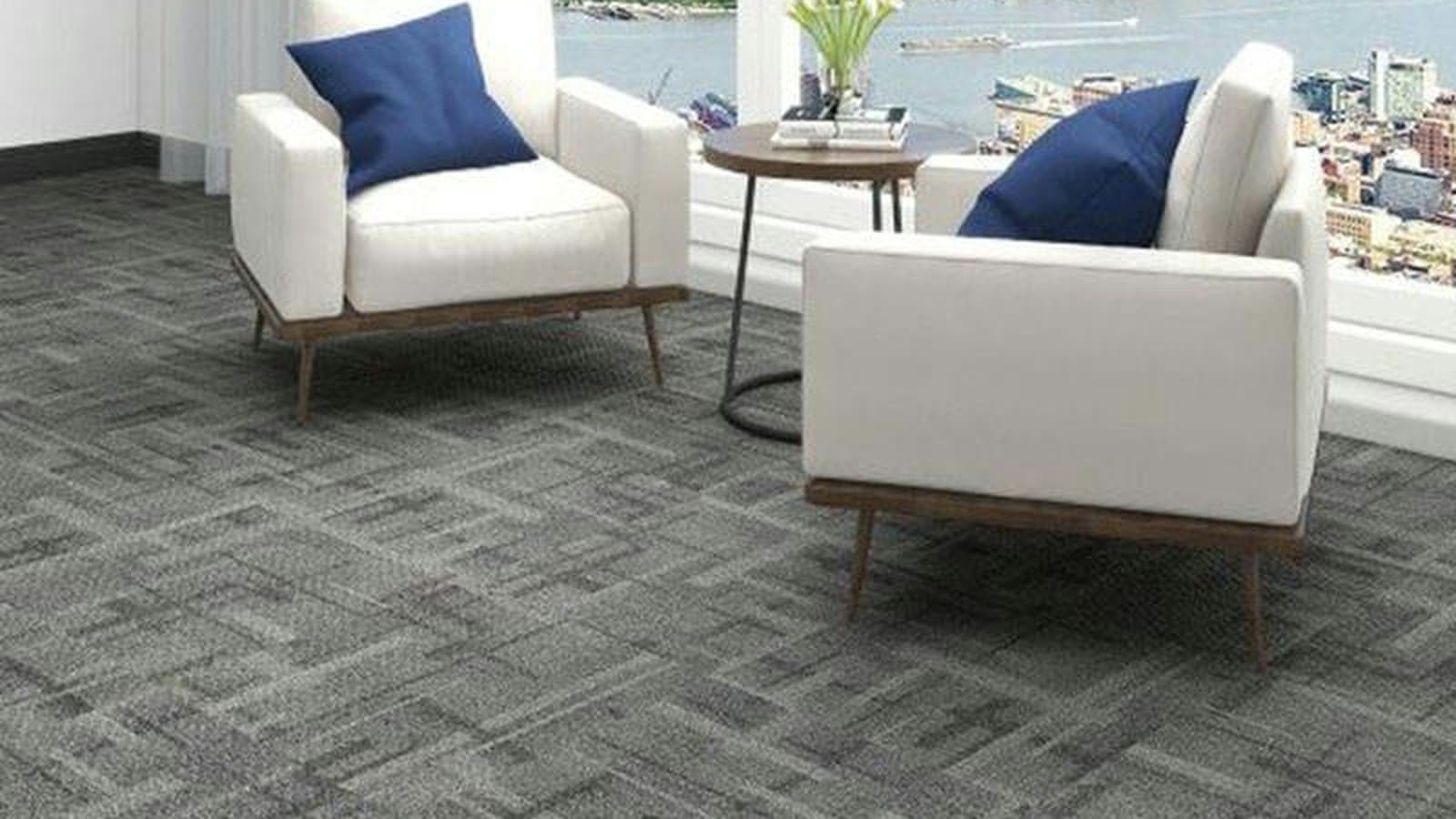
A fit-out contractor sends one spec for a whole building: "carpet tiles, grey, 50×50." Six months later the server room has static problems, the hotel-style corridor on the top floor looks tired, and the library is louder than anyone expected. Same tile everywhere, different jobs.
This guide is for contractors, interior designers and facility buyers specifying commercial carpet tiles across a mixed building. It goes space by space: what each room asks of the floor, and which fibre, backing and tile size answers it.
The short answer
Specify commercial carpet tiles by what each space needs most. Offices need hard-wearing tiles that are easy to replace; hotels and banquet halls want a softer look and quieter rooms; airports, malls and exhibition halls need the toughest face fibre and fire paperwork; libraries and meeting rooms value sound absorption; server rooms and bank back offices need anti-static tiles.
Commercial carpet tiles at a glance
Use this as a starting point, then confirm the exact product and test reports in the quote:
- Offices and meeting rooms: nylon or polypropylene face, PVC or bitumen backing, 50×50 cm or 25×100 cm planks. Priority: wear resistance and easy tile replacement.
- Hotels, banquet and function rooms: nylon face, cushion or felt backing, larger formats or planks. Priority: appearance, comfort underfoot and quiet.
- Airport terminals, malls, museums and exhibition halls: nylon face, PVC or bitumen backing. Priority: heavy traffic, rolling loads and fire documentation.
- Libraries: nylon or polypropylene face with a felt or cushion backing. Priority: sound absorption.
- Server rooms and bank back offices: nylon face with anti-static performance confirmed in writing. Priority: static control.
- Hospitals and clinics: a stain-resistant tile that can be lifted and cleaned or swapped. Priority: hygiene and fast replacement, with any antibacterial claim backed by a test report.
Offices and meeting rooms
Offices are where commercial carpet tiles earn their reputation. The floor takes chair castors, coffee and daily foot traffic, and the layout changes every few years. Because each tile is a separate piece, a damaged or stained tile is lifted out and replaced instead of re-carpeting the room.
For open-plan areas, 50×50 cm tiles are the usual choice; 25×100 cm planks suit corridors and give a more linear look. Polypropylene keeps the budget down on quiet floors, while nylon is the safer pick for busy walkways. Meeting rooms benefit from carpet tiles' sound-absorbing nature, which matters more than most people expect once the glass walls go up.
Our modular office carpet tile is built for this kind of floor. To work out quantities, see how many carpet tiles you need for an office floor.
Hotels, banquet halls and function rooms
Hotels want the floor to look like carpet, not like an office. That usually means a nylon face, a richer colour or pattern, and sometimes a larger format or plank to reduce the grid effect. Corridors and banquet halls see bursts of heavy traffic and spills, so the ability to replace a single tile after a function is a real advantage over broadloom.
Carpet tiles also help with warmth and noise in guest areas: they insulate the floor and absorb sound from trolleys and footsteps. If the design uses a directional pattern, choose the installation layout early. Our guide to carpet tile sizes and installation patterns explains monolithic, quarter-turn, ashlar and herringbone layouts.
Airports, malls, museums and exhibition halls
Terminals and malls are the hardest floors in this list. Wheeled luggage, cleaning machines and constant foot traffic mean the face fibre and backing have to resist heavy pressure without flattening or curling at the edges. Nylon is the fibre to ask for here, on a PVC or bitumen backing.
Public buildings also come with fire requirements. Nylon carpet tiles are flame-retardant, but the paperwork depends on where the project is: for example, ASTM E648 and ASTM E662 test reports are common requests for US projects, while EU projects usually ask for a classification such as Bfl-s1 or Cfl-s1. Tell us the market at the enquiry stage so the right reports are prepared with the quote, not after the contract is signed.
Exhibition halls add one more need: floors that get reconfigured between shows. Loose-laid or tab-fixed carpet tiles make that faster than glued broadloom.
Libraries and quiet rooms
A library is a sound problem first and a flooring problem second. Hard floors carry footsteps and chair scrapes across a reading room; carpet tiles absorb them. A felt or cushion backing adds a little more softness and sound absorption than a hard PVC backing.
Libraries also have book trolleys, so don't trade away durability completely. A mid-weight nylon or polypropylene face on a felt backing is a sensible balance.
Server rooms, banks and control rooms
Static is the issue in rooms full of electronics. Anti-static carpet tiles reduce the build-up of static charge as people walk across the floor, which is why they're specified for server rooms, bank back offices and control rooms.
Don't take anti-static performance on trust. Ask for the anti-static test result for the exact product and backing, and make sure it's referenced in the purchase order. If the room also has a raised access floor, confirm the tile size against the floor panels before ordering.
Hospitals and clinics
Healthcare floors are usually split: hard floors in clinical areas, carpet tiles in offices, waiting rooms and corridors where noise and comfort matter. In those areas, stain resistance and fast replacement are what count. A tile with a spill on it can be lifted, cleaned off the floor or replaced in minutes.
Some carpet tiles are described as resistant to bacteria. If that matters for your tender, ask for the test report that backs the claim rather than relying on a product description.
One building, one order: keep it simple
A mixed building doesn't need six different products. Most projects work with two or three: a hard-wearing nylon tile for public and heavy-traffic areas, a lower-cost tile for back offices, and an anti-static version for technical rooms. Sticking to one tile size across the building simplifies ordering, spares and future swaps.
Order spare tiles from the same production lot for every product you use, because later lots can differ slightly in shade. Our guide to carpet tile maintenance and replacement explains how to store and use them, and what to check before a bulk carpet tile order covers pile weight, tolerances and packing.
What to send with your enquiry
Send the floor area for each space type, the tile size, the preferred face fibre and backing, the colour or design reference, the country of installation and any fire or anti-static documents your project needs. Standard sizes are 50×50 cm, 25×100 cm and 60×60 cm (61×61 cm); custom sizes work best in multiples of 25 cm. MOQ and lead time are confirmed in the quote. See the carpet tile range or send us your project.
FAQ
What are the best commercial carpet tiles for offices? For offices, choose hard-wearing nylon or polypropylene carpet tiles in 50×50 cm or 25×100 cm on a PVC or bitumen backing, so damaged tiles can be replaced individually.
Which carpet tiles are suitable for server rooms? Server rooms need anti-static carpet tiles. Ask for the anti-static test result for the exact product and backing before ordering.
Do commercial carpet tiles absorb sound? Yes. Carpet tiles absorb footstep and chair noise, which is why they're used in libraries, meeting rooms and hotel corridors; a felt or cushion backing adds more sound absorption.
What fire documents do commercial carpet tiles need? Fire documents depend on the market. US projects often ask for ASTM E648 and ASTM E662 test reports, and EU projects usually ask for a classification such as Bfl-s1 or Cfl-s1.
This article is general industry guidance. For advice on a specific project, contact our team.
Related products