
Carpet Protectors · 5 min read · October 19, 2026
Non-Adhesive PVC Drawer Liners: How Homeware Brands Spec a Private-Label Range
A drawer liner sounds like the simplest product in a homeware range, until the returns say it left glue on a painted cabinet or soaked up olive oil. Here's how homeware brands and retailers spec non-adhesive PVC drawer liners for a private-label range.
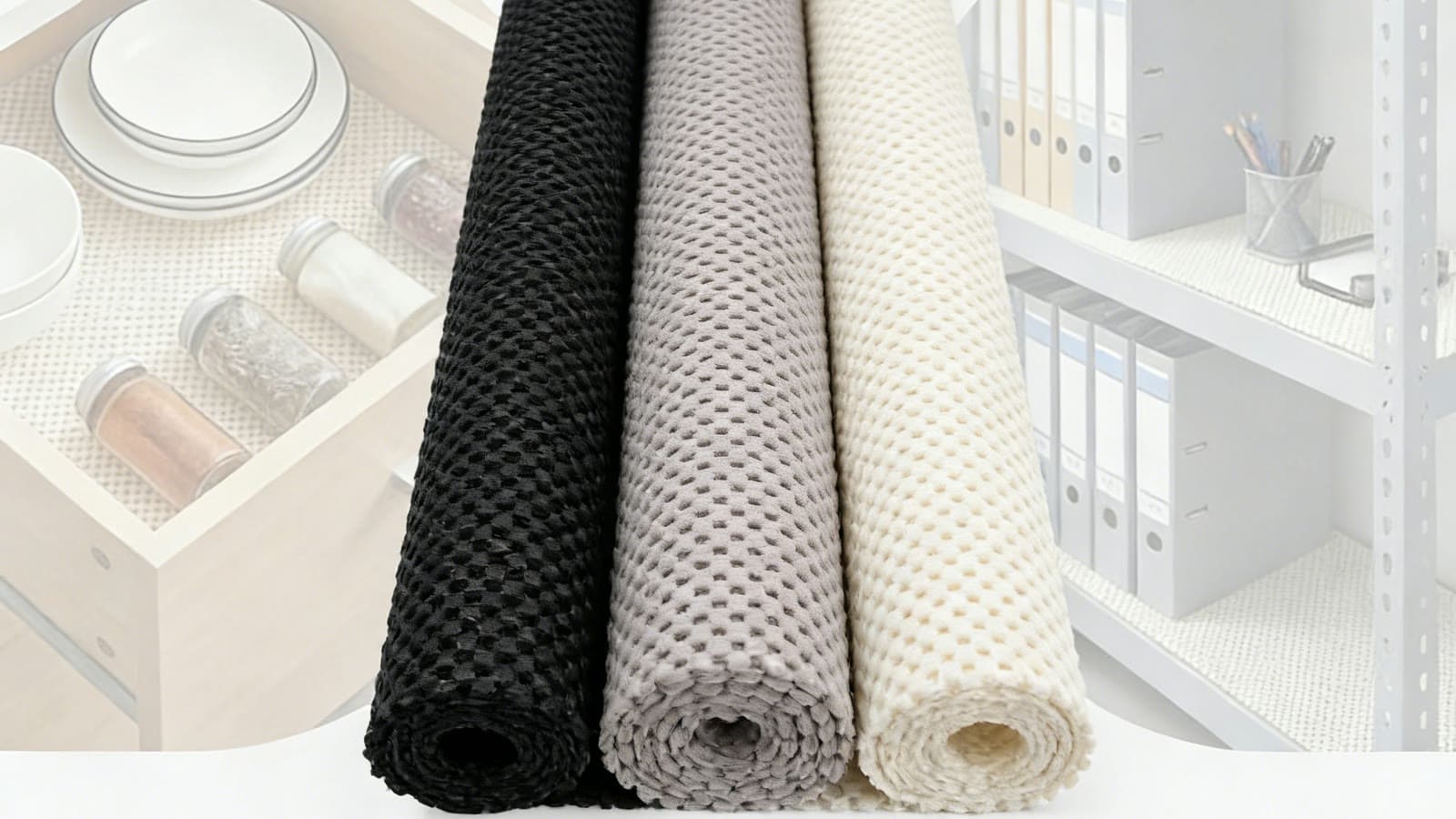
Pull out a kitchen drawer a year after an adhesive liner went in. Lift a corner. If you're unlucky, a sticky film comes with it, or the paint does. That's the complaint non-adhesive drawer liners are designed to avoid.
This guide is for homeware brands, kitchen and storage retailers and Amazon sellers building a private-label range of drawer and shelf liners. It covers how a non-adhesive PVC drawer liner works, what to specify and how an OEM order runs.
The short answer
A non-adhesive PVC drawer liner grips the drawer through friction, not glue, so it lifts out cleanly with no residue and won't damage paint. Closed-cell PVC is non-porous, so spills wipe off instead of soaking in. For a private-label range, specify thickness (1.5–2.0 mm), roll width (30–150 cm), pattern or colour, and packaging.
How a non-adhesive drawer liner stays put
A non-adhesive drawer liner relies on a high-friction surface rather than a sticky back. The liner sits flat in the drawer and the weight of plates, cutlery or tools presses it against the base, so it doesn't slide when the drawer opens and closes.
Because there's no adhesive, there's nothing to leave behind. The liner can be lifted out, washed and put back, or moved to a new kitchen. For a customer renting a flat or protecting a new painted cabinet, that's the selling point, and it belongs on the front of the pack.
Closed-cell PVC vs open-cell EVA
This is the spec decision that matters most for kitchen use. Closed-cell PVC is non-porous: red wine, oil and soy sauce sit on the surface and wipe off with a cloth. An open-cell EVA liner has pores that liquid can get into, so a spill under the oil bottle becomes a stain that stays.
If your range goes into kitchens, bathrooms or under the sink, closed-cell PVC is the better material. Open-cell foam liners still have a place in dry wardrobe drawers, but they're harder to keep clean where spills happen.
What to specify for a private-label drawer liner range
A drawer liner range is mostly a set of decisions about size, look and packaging. The base material stays the same:
- Thickness: 1.5–2.0 mm. Thinner liners trim more easily and suit cutlery drawers; the thicker end feels more substantial and cushions glassware on shelves.
- Width: OEM roll widths from 30 cm to 150 cm. Narrow rolls suit drawers and shelves; wide rolls suit large cupboards, fridge shelves and tool chests.
- Look: clear, solid colours or a pattern. Clear liners show off the cabinet; patterns sell better where the liner is visible, such as open shelves and wardrobe drawers.
- Format: rolls the customer trims to fit, or pre-cut sheets for standard drawer and fridge sizes.
- Packaging: private-label wrap, header card or box, with the roll size and the trim-to-fit and no-adhesive messages printed on it.
Where the liners sell
Kitchen drawers and cutlery trays are the obvious place, but they aren't the only one. The same PVC liner works on fridge shelves, under the sink, in bathroom cabinets, on wardrobe shelves and in tool drawers. A range that shows three or four of those uses on the pack reaches more customers than one labelled "kitchen drawer liner".
Our cabinet and shelf dust mat is the base product for this kind of range. For the difference between shelf liners and drawer mats, see cabinet and shelf liners vs drawer mats.
Care: what to tell the customer
Keep the care line short. Wipe the liner with a damp cloth; for a deeper clean, lift it out and wash it with water and mild soap, then let it dry flat before putting it back. Because the liner has no adhesive, washing it doesn't ruin it.
MOQ, samples and the OEM order
Custom-size OEM drawer liners start at 3,000 m², and samples can be ready in about 3 working days, so you can check the grip, thickness and pattern before committing. Send the target thickness, roll width and length, pattern or colour, packaging artwork and quantity, and the lead time is confirmed in the quote.
Building a wider floor-protection range at the same time? The same non-adhesive grip idea is behind our rug pads. Our comparison of felt-and-rubber vs thin grip rug pads explains the options. Or send us your range brief.
FAQ
Do non-adhesive drawer liners slide around? A non-adhesive drawer liner grips through friction and the weight of what's in the drawer, so it stays in place without glue.
Will a non-adhesive drawer liner damage painted cabinets? No. A non-adhesive PVC drawer liner has no glue, so it leaves no residue and lifts out without damaging paint.
Is PVC or EVA better for kitchen drawer liners? Closed-cell PVC is better for kitchen drawer liners because it's non-porous; spills like oil, wine and soy sauce wipe off instead of soaking in as they can with open-cell EVA.
What is the MOQ for custom drawer liners? Custom-size OEM PVC drawer liners start at 3,000 m², with samples in about 3 working days.
This article is general industry guidance. For advice on a specific project, contact our team.
Related products