
Buying Guides · 6 min read · November 19, 2026
Rug Pad Sizing and Cutting: Specify the Finished Fit Before a Bulk Order
Plan rug pad sizing and cutting from the actual rug, floor and approved outline. Agree edge inset, cutting responsibility and sample fit before a bulk order.
Measure the rug you will supply
Rug pad sizing should begin with the actual rug and the intended floor, followed by an approved pad outline and a physical fit check. Agree the edge inset and who will cut the pad before ordering. Use a product-specific cutting instruction rather than assuming every underlay can be finished in the same way.
A retail size name is a useful label, but it is not a cutting drawing. Measure the rug in the condition in which it will be used and note irregular edges, rounded corners or a non-rectangular outline. Keep the rug reference with the measurement record so a warehouse team does not pair a pad cut for one design with another rug that happens to carry the same nominal size.
Separate rug dimensions from pad dimensions
| Detail | Record on the drawing | Check on the sample |
|---|---|---|
| Rug outline | Actual length, width and shape | Rug lies as intended |
| Pad outline | Finished dimensions and orientation | Pad fits beneath that rug |
| Edge inset | Agreed distance at each relevant edge | Coverage and edge appearance |
| Corners or curves | Labelled detail or full-size pattern | No exposed or folded pad |
| Identification | Rug reference and drawing revision | Correct pair can be picked again |
For a rectangle, the pad dimension follows the rug dimension minus the agreed inset at each opposite edge. Confirm whether a stated reduction means “per side” or “off the total dimension”; those instructions produce different results. This guide deliberately supplies no universal inset number. Approve the value for the selected rug-and-pad combination instead of copying another manufacturer’s recommendation.
Check floor compatibility before approving the cut
A well-sized pad still needs to be suitable for the floor and rug. Send the floor type and any available finish information when requesting a sample. Ask the supplier to confirm the selected pad’s intended use and orientation. The knowledge base describes grip and cushioning roles, but a general product description should not become a promise that every floor finish is compatible.
Compare grip and cushioned underlay constructions before finalising thickness and size. Then check the combined rug and pad in the actual location, including door movement and the route people use around the edge. If the proposed outline is correct but the combined assembly does not suit the site, revisit construction or placement rather than cutting away support until the door happens to clear.
Agree who cuts and who approves the finished pair
Choose between supplier-finished pads and local finishing only after confirming what the selected construction permits. Ask for a product-specific cutting method and any edge-finishing requirement. For a local trial, use an appropriate protected work area rather than making the installed floor the cutting surface. Keep the approved outline available to the person doing the work.
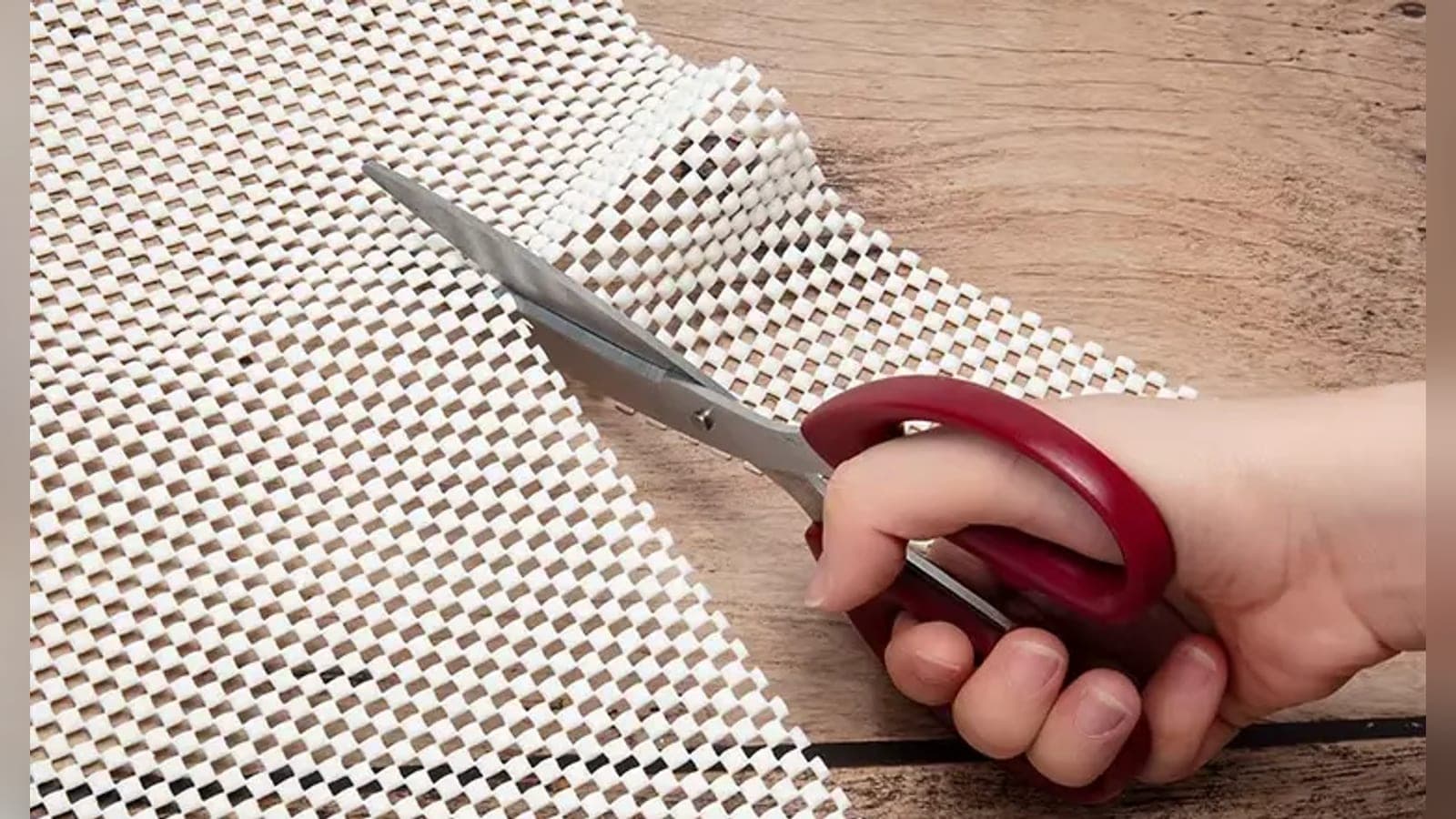
Approve one finished pair before repeating the process. Check the pad from each edge, confirm it is not folded under the rug, and label the result with the drawing revision. A photo showing scissors in use does not establish a cutting method for every product in a catalogue. The underlay range for rug programmes is the starting point for selection; the approved sample and written instruction establish the order-specific finishing brief.
Use a mismatch to identify the missing instruction
Consider a planning example: a buyer asks for a pad “smaller than the rug”, and the supplier interprets the reduction as a total change while the store expects it at each edge. Both teams have followed their own interpretation, but the finished outline differs. The correction is an explicit dimensioned drawing, not another message repeating “slightly smaller”. This is a workflow illustration, not a customer case.
When a sample differs, record rug measurements, requested pad dimensions, actual readings and the drawing used. Confirm whether the issue is the outline, the way the rug lies or the selected construction before ordering replacements. Keep that evidence with the sample approval record for made-to-size mats. It prevents a future reorder from reproducing the same ambiguous instruction.
Build a paired size list for the order
Send each rug reference, measured outline, floor type, proposed pad construction, finished pad dimensions and quantity. State whether you want finished pieces or material for local cutting, and confirm packing labels that keep each pad paired with the correct rug. Ask for MOQ, available shapes, finishing arrangements and lead time for that actual mix rather than assuming one rule covers the entire range.
For rug retailers planning an underlay add-on range, store the approved paired list with the merchandising and reorder records. For hotel rug-and-pad replacements, include the room or position reference. A later rug-size or floor change should trigger a fresh fit check. Keeping the old product name is not enough to show that the new combination will fit.
This article is general industry guidance. For advice on a specific project, contact our team.
Related products