Logo Mats · 5 min read · October 20, 2026
Sublimation vs Inkjet Printing for Custom Mats: Which Face Takes Which Print
On a custom mat, the printing method follows the face fibre: polyester takes dye-sublimation, nylon takes inkjet. Here's how the two compare on colour, detail and wear, and which one fits logo mats, door mats, putting mats and sublimation blanks.
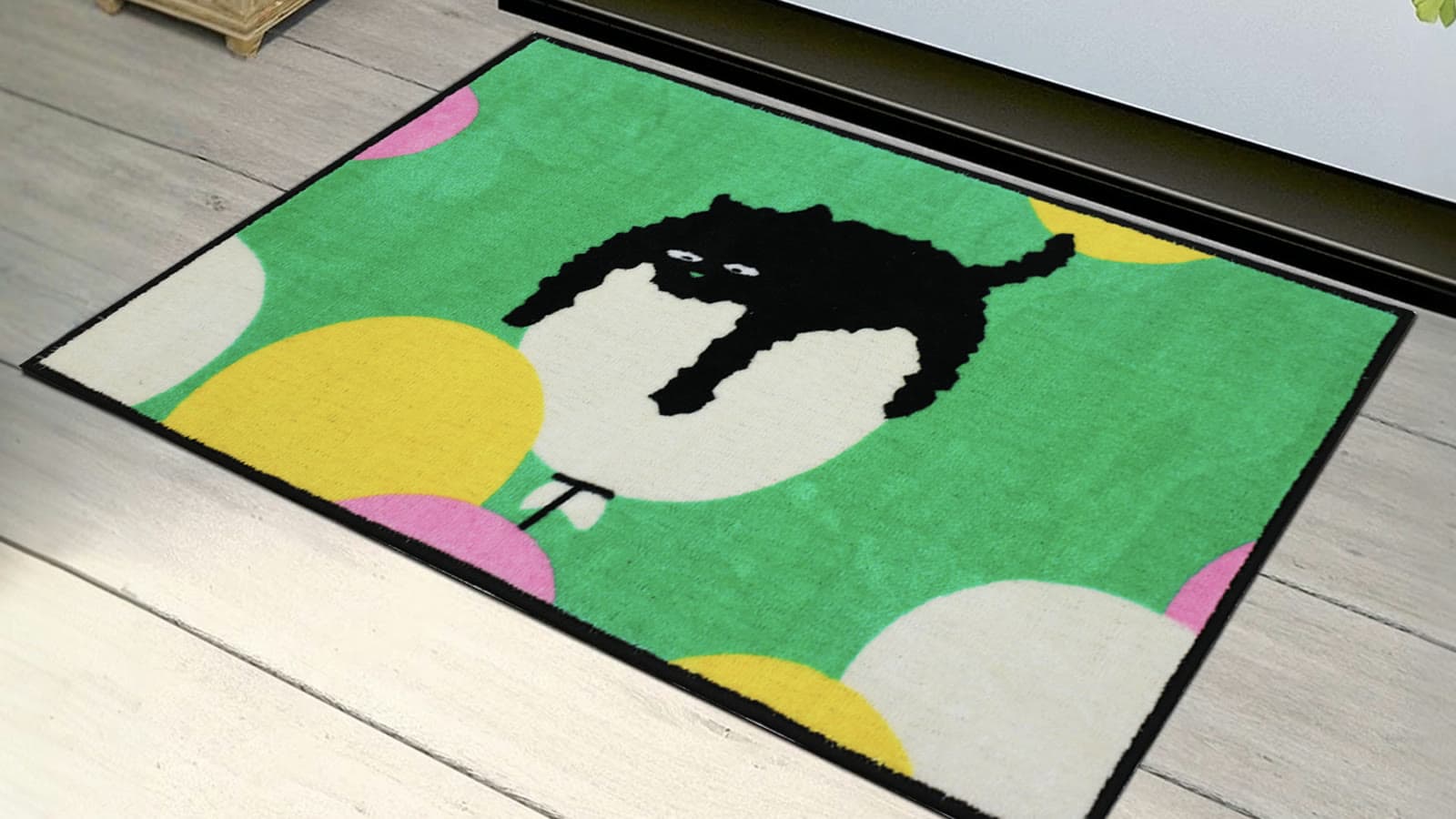
A buyer sends a logo, asks for "sublimation" because a previous supplier used the word, and specifies a nylon mat for a busy shop entrance. Those two requests don't fit together. Sublimation dye bonds with polyester, not nylon, so the printing method and the mat face have to be chosen as a pair.
This guide explains how dye-sublimation and inkjet printing differ on custom mats, which face fibre each one needs, and how to pick for logo mats, door mats, putting mats and sublimation blanks.
The short answer
Sublimation printing is for polyester mat faces; inkjet printing is for nylon faces. Choose a polyester face with sublimation when the priority is photographic detail, smooth gradients or printing your own blanks. Choose a nylon face with inkjet when the mat must take heavy foot traffic, frequent cleaning or outdoor weather.
How sublimation printing works on a mat
Dye-sublimation turns ink into a gas under heat and pressure, and the gas bonds with polyester fibres. The colour becomes part of the fibre rather than a layer on top, so the face stays soft and the print doesn't crack or peel.
That's why sublimation mats have polyester faces, and why sublimation blank mats carry a coating tuned for even ink take-up: the coating and base are what make the colours bright and the image last. Our sublimation blank polyester door mat has a white polyester top on an anti-slip rubber backing, made for print shops and decorators who press their own designs.
How inkjet printing works on a nylon mat
Inkjet printing jets dye straight into the face of a finished nylon mat. On door mats and logo mats this is full-colour CMYK printing, and on logo mats it can run on ChromoJet equipment with Pantone colour matching for brand colours.
Nylon is the face we recommend for entrances. It holds grit, absorbs water and stands up to cleaning, and the inkjet print on our door mats is weather-resistant and slow to fade. The trade-off is fine detail: a deep nylon pile shows a logo crisply, but a photograph with tiny text won't look as sharp as it would on flat polyester.
Sublimation vs inkjet at a glance
- Face fibre: sublimation needs polyester; inkjet is used on nylon.
- Best for: sublimation suits photos, gradients and fine detail; inkjet suits logos, bold graphics and brand colours.
- Wear: polyester sublimation mats suit homes, counters and light traffic; nylon inkjet mats suit commercial entrances and frequent cleaning.
- Who prints it: sublimation can be done by the buyer on blank mats with a heat press; inkjet on nylon is done at the mill.
- Typical products: sublimation blank door mats, blank area rugs, sublimation putting and dart mats; inkjet logo mats, printed door mats and nylon dart mats.
Which print for which mat
Logo mats for shop, office and hotel entrances: nylon with inkjet. The entrance is where a mat gets walked on, wet and washed, and nylon handles all three. See the logo mat range and our guide to how long logo mat printing lasts.
Printed door mats for homes: either works. Home door mats are made with a nylon or polyester face on a latex or TPR backing. Polyester takes a detailed design well; nylon is the tougher face for a busy front door. Browse printed door mats.
Putting mats: both, depending on speed and colours. Our MC-2350PT (350gsm nylon face) and MC-2270PT (270gsm polyester face) putting mats use a 900gsm TPR backing with CMYK printing (MC-2350PT up to 12 colours; MC-2270PT without a colour limit), while the MC-SJR has a 120gsm polyester face on a non-woven backing and is printed by sublimation.
Dart mats: the MC-2250R is a 250gsm nylon face on a latex backing printed with 12-colour spot inkjet; the MC-SJR version is polyester on non-woven, printed by sublimation.
Blanks for print shops: sublimation, always. If you're pressing designs yourself, you need a polyester face with a sublimation coating. Our guide to choosing sublimation blank mats covers the options, and how to sublimate a blank door mat covers the pressing.
Artwork tips for each method
- For sublimation, send high-resolution artwork. Photos and gradients are where sublimation earns its place, so a low-resolution file wastes the method.
- For inkjet on nylon, keep text large and lines bold. Small type can soften into the pile.
- Give Pantone references for brand colours on logo mats, so they can be matched.
- Expect some difference between a screen and a mat face. Every custom design is confirmed on a free digital proof before production.
How to order
Tell us where the mat will be used, the size and quantity, and send your artwork. We'll recommend the face and printing method together and confirm the design on a free digital proof. MOQ and lead time are confirmed in the quote. Send us your project.
FAQ
Can you sublimate a nylon mat? No. Sublimation dye bonds with polyester fibres, so a nylon mat face is printed by inkjet instead.
Is sublimation or inkjet more durable on a mat? For heavy foot traffic, a nylon mat printed by inkjet is the tougher choice. A polyester mat printed by sublimation suits homes, counters and lighter traffic.
Which printing method gives more detail? Sublimation on a flat polyester face shows fine detail, photos and gradients best. Inkjet on nylon suits logos and bold graphics.
Can I print blank mats myself? Yes, if they're sublimation blanks with a polyester face and a sublimation coating, printed with a heat press.
This article is general industry guidance. For advice on a specific project, contact our team.
Related products